
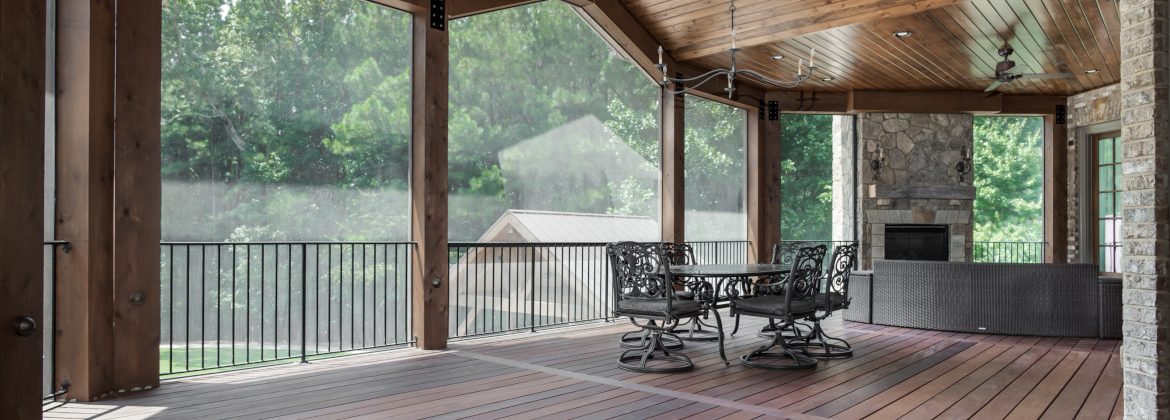
Fixed Screens vs. Retractable Screens: Which Is Best for Your Porch or Patio?
If you are planning to screen a porch, patio or other outdoor living area, one of the first decisions is whether the screen should stay in place all the time or disappear when you do not need it.
Fixed screens and retractable screens can both provide insect protection and make an outdoor space more comfortable, but they work very differently. Neither option is automatically better. The right choice depends on how you use the space, how important an open view is, the size of the opening, and whether you want the screen to remain in place permanently.
This guide compares the two systems so you can narrow down which approach makes the most sense for your porch or patio.
Fixed Screens vs. Retractable Screens: Quick Comparison
| Priority | Fixed Screens | Retractable Screens |
|---|---|---|
| Continuous insect protection | Strong fit | Protection when lowered |
| Fully open view at times | Screen remains in place | Strong fit |
| Simple everyday use | No raising or lowering required | Manual or motorized operation |
| Large porch or patio openings | Depends on framing and design | Often well suited, especially with motorized operation |
| Permanent screened porch feel | Strong fit | More flexible, less permanent |
| Changing the space throughout the day | Limited flexibility | Strong fit |
That comparison covers the basic difference, but there are several other factors worth considering before choosing a system.
What Are Fixed Screens?
Fixed screens remain installed across the opening all the time. They are commonly used for screened porches, patios and other outdoor areas where homeowners want continuous insect protection and do not need the opening completely clear.
Screens of Georgia builds custom fixed screen systems around the dimensions and structure of the opening. Depending on the project, the design can be adapted to porches, patios and larger framed outdoor spaces.
Fixed Screens May Be a Good Choice When:
- You want the porch or patio screened all the time
- You do not need the opening completely clear
- You prefer a system without moving screen components
- The space is used regularly as a screened outdoor room
- Continuous insect protection is more important than flexibility
Things to Consider With Fixed Screens
- The screen remains visible when it is not needed
- The opening cannot be returned to a completely open-air configuration
- The screen may slightly affect the view depending on the mesh selected
- Repairs normally require work on the individual screen panel or frame
What Are Retractable Screens?
Retractable screens are designed to move out of the opening when they are not needed. The screen can be lowered or extended when you want insect protection, shade or privacy, then retracted when you want the porch or patio fully open.
They can be manually operated or powered. Larger porch and patio openings are often candidates for motorized screen systems, which allow the screen to be raised and lowered without manually handling a large panel.
Retractable Screens May Be a Good Choice When:
- You want an unobstructed opening some of the time
- Preserving the view is important
- You use the porch differently throughout the day or season
- You want screening only when insects or other conditions make it useful
- You have a large opening where motorized operation would be convenient
Things to Consider With Retractable Screens
- The system contains moving components
- Tracks, housings and surrounding areas should be kept clean
- Motorized systems may require power and additional installation planning
- The screen only provides protection when it is lowered
Are Motorized Screens Different From Retractable Screens?
Motorized screens are generally a type of retractable screen rather than a completely separate category.
The main difference is how the screen is operated. A manual retractable screen is moved by hand, while a motorized screen uses a powered system to raise and lower the screen.
Motorized screens can be especially useful for wide or tall porch openings, outdoor kitchens and other spaces where a large screen may be used frequently.
Manual Retractable Screens May Make Sense When:
- The opening is smaller or easy to reach
- The screen will only be adjusted occasionally
- A simpler operating system is preferred
Motorized Screens May Make Sense When:
- The opening is large, wide or tall
- Several screens may be raised and lowered regularly
- Convenient operation is important
- The outdoor space is used frequently for entertaining or everyday living
Which Screen Is Better for a Porch?
For a porch that you want screened continuously, a fixed screen is often the simpler starting point. The screen remains in place and provides ongoing insect protection without needing to be raised or lowered.
If you sometimes want the porch completely open, a retractable screen provides more flexibility. You can lower the screen when insects become a problem and retract it when you want an open-air porch.
Homeowners who are still deciding can also review our broader Porch & Patio Screens page, which covers several ways to screen and improve outdoor living areas.
Which Screen Is Better for a Patio?
Patios often have larger openings and may be used differently depending on the weather, time of day or activity. That can make retractable and motorized screens especially useful when flexibility matters.
For example, you may want a patio completely open during a mild afternoon but screened later in the evening when mosquitoes become more active. A retractable system allows the same space to work both ways.
A fixed screen can still be the right solution when the goal is to create a more permanent screened patio and you do not expect to regularly open the space.
What About Bugs, Pollen, Shade and Privacy?
The screen system itself is only part of the decision. The material installed in that system also matters.
Insect Mesh
Insect mesh is designed primarily to reduce mosquitoes, flies and other pests while maintaining airflow and visibility. It can be used in both fixed and retractable systems.
Pollen and Outdoor Debris
Screening can reduce some windblown pollen and debris entering a porch or patio, but no standard screen system turns an outdoor space into a sealed or pollen-free room. Denser materials may filter more particles, while more open mesh generally provides better airflow and visibility.
Sun and Glare
If direct sun and glare are the main problems, a solar-oriented screen material or a dedicated solar shade may be a better starting point than standard insect mesh.
Privacy
Denser privacy-oriented fabrics can reduce daytime visibility into a porch or patio. Privacy varies with the material and lighting conditions, so a fabric that offers good daytime privacy may behave differently after dark when the space is brightly lit.
Which Option Is Better for Entertaining?
This depends on how you prefer the space to feel.
If you like keeping a porch or patio screened throughout a gathering, fixed screens provide continuous protection without requiring any adjustment.
If you prefer to begin with a completely open space and lower the screens later when insects appear, retractable screens provide that flexibility. Motorized operation can make that transition especially convenient across larger openings.
What About the View?
Both fixed and retractable screen materials are designed to preserve visibility, but any screen placed across an opening will affect the view to some degree.
The main advantage of a retractable system is that the screen can move completely out of the opening when it is not needed. If preserving an unobstructed view at certain times is a major priority, that can be an important difference.
For a porch that remains screened all the time, a well-designed fixed screen system can still maintain a strong visual connection to the yard, pool or surrounding landscape.
Maintenance: Fixed vs. Retractable Screens
Both types of screens require some basic care.
Fixed Screens
- Keep the screen and frame clean
- Inspect for tears or impact damage
- Repair or replace damaged screen material as needed
Retractable Screens
- Keep tracks and surrounding areas clear of debris
- Clean screen material gently
- Inspect moving components periodically
- Follow the manufacturer’s operating and weather guidelines
A fixed screen has fewer moving components, while a retractable system provides greater flexibility. That tradeoff is one of the most important differences between the two.
How to Decide Between Fixed and Retractable Screens
Ask yourself these questions before choosing:
- Do I want the porch or patio screened all the time?
- Do I want the opening completely clear at certain times?
- How important is preserving an unobstructed view?
- How large are the openings?
- How often will the screens be opened or closed?
- Is insect protection the main goal, or do I also need sun and privacy control?
- Would manual operation be practical, or would motorized screens make more sense?
If continuous screening and simplicity are the priorities, fixed screens may be the better starting point. If you want the ability to switch between screened and completely open, retractable screens are likely worth considering.
For a broader look at all available options, you can also compare Screens of Georgia’s screen, shade and outdoor living products.
Fixed vs. Retractable Screen FAQs
Are fixed screens or retractable screens better?
Neither is better for every project. Fixed screens are usually a good fit when you want continuous screening. Retractable screens are useful when you want the opening fully clear part of the time.
Which type of screen is best for a screened porch?
Fixed screens work well for a porch that should remain screened continuously. Retractable screens are a better fit when you want the option of opening the porch completely at certain times.
Can retractable screens be motorized?
Yes. Motorized retractable screens are commonly used for larger porch and patio openings where powered operation makes the system easier to raise and lower.
Do fixed screens provide better bug protection?
Both fixed and retractable insect screens are designed to reduce insects when the opening is fully screened. The main difference is that a fixed screen remains in place continuously, while a retractable screen only provides protection when it is lowered or extended.
Can screens help reduce pollen?
Screens can reduce some windblown pollen and outdoor debris, but they do not make an outdoor porch or patio pollen-free. The amount of filtering depends partly on the screen material selected.
What if sun and glare are a bigger problem than insects?
If sun, glare or daytime privacy are the main concerns, consider a denser screen material or a dedicated solar or privacy shade. The best material depends on how much airflow, visibility and shade you want.
Find the Right Screen for Your Porch or Patio
The best screen system is the one that fits the way you actually want to use your outdoor space.
If you want a porch that stays screened every day, a fixed system may be the simplest choice. If you want the ability to open the space completely and add screening only when you need it, a retractable or motorized system may make more sense.
Screens of Georgia installs custom fixed screens, retractable screens, motorized screens, porch and patio screen systems, and solar and privacy shades for homes throughout its Georgia service area.
Contact Screens of Georgia to discuss your porch or patio and compare the options for your space.
