
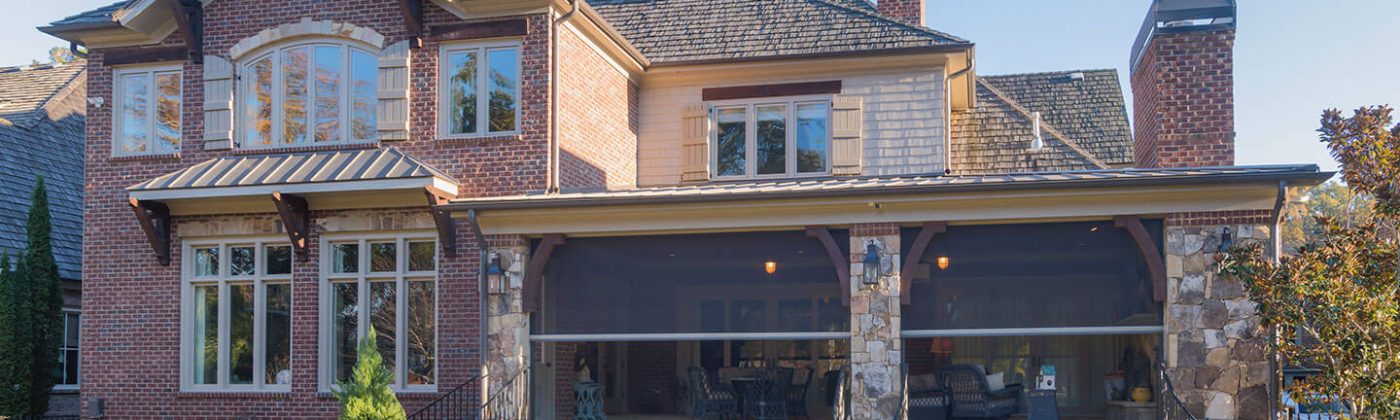
Can Retractable Screens Help With Pollen? What Georgia Homeowners Should Know
Spring pollen is hard to avoid in Georgia. It settles on porches, patios, furniture, cars, walkways and just about every other outdoor surface.
That naturally raises a question for homeowners considering retractable screens: can screening help reduce pollen?
The answer is yes, to a degree. Screens can reduce some windblown pollen and outdoor debris entering through a screened opening, but they should not be viewed as an air-filtration system or a way to create a pollen-free environment.
How Pollen Reaches Porches and Outdoor Living Spaces
Pollen travels through the air and can enter an outdoor or semi-enclosed space from many directions.
- Wind carries pollen through open porch and patio openings
- Pollen settles on furniture, flooring and other surfaces
- People and pets can track pollen into the space
- Nearby trees, grass and landscaping can contribute to local pollen levels
Because a screened porch or patio is still connected to the outdoors, no standard screen system can completely prevent pollen from entering.
How Retractable Screens Can Help Reduce Windblown Pollen
A retractable screen creates a physical barrier across an opening. That barrier can reduce some of the pollen, leaves and debris carried directly into the space by wind.
The amount of reduction depends on several factors, including:
- The screen material
- The size of the openings in the mesh
- Wind direction and speed
- How many sides of the space are screened
- Nearby vegetation and local pollen conditions
In other words, screens can help, but they do not seal the porch or patio from the surrounding environment.
Does Finer Screen Material Block More Pollen?
Denser screen materials may reduce more windblown debris than a very open insect mesh, but there are tradeoffs.
As screen material becomes denser, it may also reduce:
- Airflow
- Outward visibility
- Natural light
That means the “best” material depends on what matters most to you.
If your main priority is mosquitoes and airflow, a more open insect mesh may make the most sense. If reducing windblown debris, glare or visibility into the space is more important, a denser material may be worth considering.
The goal is to balance pollen reduction, airflow, visibility, insect protection and comfort rather than assuming one mesh can maximize everything at once.
Retractable Screens vs. a Sealed Indoor Space
A screened porch should not be confused with a sealed indoor room.
Retractable screens do not replace:
- Closed windows and doors
- HVAC filtration
- Air purifiers
- Weather-sealed construction
If minimizing indoor pollen is the primary goal, building-envelope and air-filtration measures are more important than exterior screening alone.
Retractable screens are better viewed as one way to make an outdoor living space more comfortable while reducing some direct exposure to windblown debris.
Why Retractable Screens Still Make Sense During Pollen Season
Even though they cannot eliminate pollen, retractable screens can still be useful during spring because they solve several outdoor-living problems at once.
- Reduce insects: Insect mesh helps keep mosquitoes, flies and similar pests out.
- Reduce some windblown debris: Screening can limit some pollen, leaves and other material entering through the opening.
- Maintain airflow: The porch can remain ventilated instead of being completely closed off.
- Preserve flexibility: Retract the screens when you want a completely open view.
For homeowners who want both openness and screening, that flexibility is one of the biggest advantages.
Can Retractable Screens Help Keep Pollen Out of the House?
If a retractable screen is installed across an exterior opening, it may reduce some windblown pollen entering directly through that opening.
However, pollen can still enter a home in many other ways, including through other doors and windows or on clothing, shoes and pets.
For that reason, retractable screens should not be treated as a complete indoor pollen-control strategy.
Porches and Patios During Georgia Pollen Season
Outdoor living spaces often collect visible pollen during spring, especially during dry and windy stretches.
Screening the openings may reduce some of the material blowing directly into the space, but regular cleaning will still be necessary.
For homeowners comparing different ways to screen an outdoor area, our Porch & Patio Screens page covers fixed, retractable and motorized options.
Manual or Motorized Screens for Large Openings
Large porch and patio openings can be screened manually or with powered operation depending on the system selected.
Motorized screens may be especially useful when:
- The opening is wide or tall
- The screen is raised and lowered frequently
- Several screen panels are installed around the same space
- Push-button operation is an important convenience
For smaller or easier-to-reach openings, manual retractable screens may be perfectly suitable.
What About Solar and Privacy Materials?
Some homeowners considering pollen reduction are also concerned about afternoon sun or privacy.
Denser solar-oriented materials may provide additional shade and glare control, while privacy-oriented fabrics can reduce visibility into the space under certain lighting conditions.
If sunlight or privacy is the primary concern, dedicated solar and privacy shades may be worth comparing with standard retractable screens.
Cleaning Retractable Screens During Pollen Season
Pollen can collect on screen mesh, tracks and surrounding surfaces, so spring is a good time to pay extra attention to routine cleaning.
- Keep tracks and channels clear of pollen, leaves and debris
- Clean the screen material using methods recommended by the manufacturer
- Avoid harsh chemicals unless they are approved for the screen fabric
- Inspect the screen periodically for tears, damage or alignment issues
- Retract or operate the system according to manufacturer guidance during strong winds or severe weather
Regular cleaning helps the system operate properly and keeps accumulated pollen from building up on the mesh itself.
Pollen and Retractable Screen FAQs
Do retractable screens block pollen?
They can reduce some windblown pollen and outdoor debris, but standard retractable screens do not create a pollen-free environment.
Is finer mesh better for pollen?
Denser materials may reduce more airborne debris, but they can also reduce airflow and visibility. The best choice depends on the balance you want between filtering, ventilation and view.
Do retractable screens improve indoor air quality?
Retractable screens should not be treated as indoor air-filtration equipment. They may reduce some windblown material entering through a screened opening, but indoor air quality depends on many other factors.
Do screens help with allergies?
Screens may reduce some pollen entering through a particular opening, but they should not be relied on as a medical or allergy-control solution.
Can screens keep pollen off porch furniture?
They may reduce some windblown pollen reaching the space, but pollen can still enter from other directions and will still require regular cleaning.
Use Retractable Screens With Realistic Expectations
Retractable screens can make a porch or patio more comfortable during Georgia pollen season by reducing insects and some windblown pollen or debris while maintaining airflow.
The important distinction is that screening reduces exposure through an opening rather than creating a sealed or filtered environment.
Screens of Georgia provides custom retractable screens, motorized screens, porch and patio screens, fixed screens, and solar and privacy shades for homes throughout Georgia.
Contact Screens of Georgia to compare screen materials and determine which option makes the most sense for your porch, patio or other opening.
